How to Prevent Mold in Vacant Seasonal Homes in Port Orange
Leaving your Port Orange seasonal home empty for months? Here is the exact humidity, AC, and leak-check routine that stops mold before it starts.
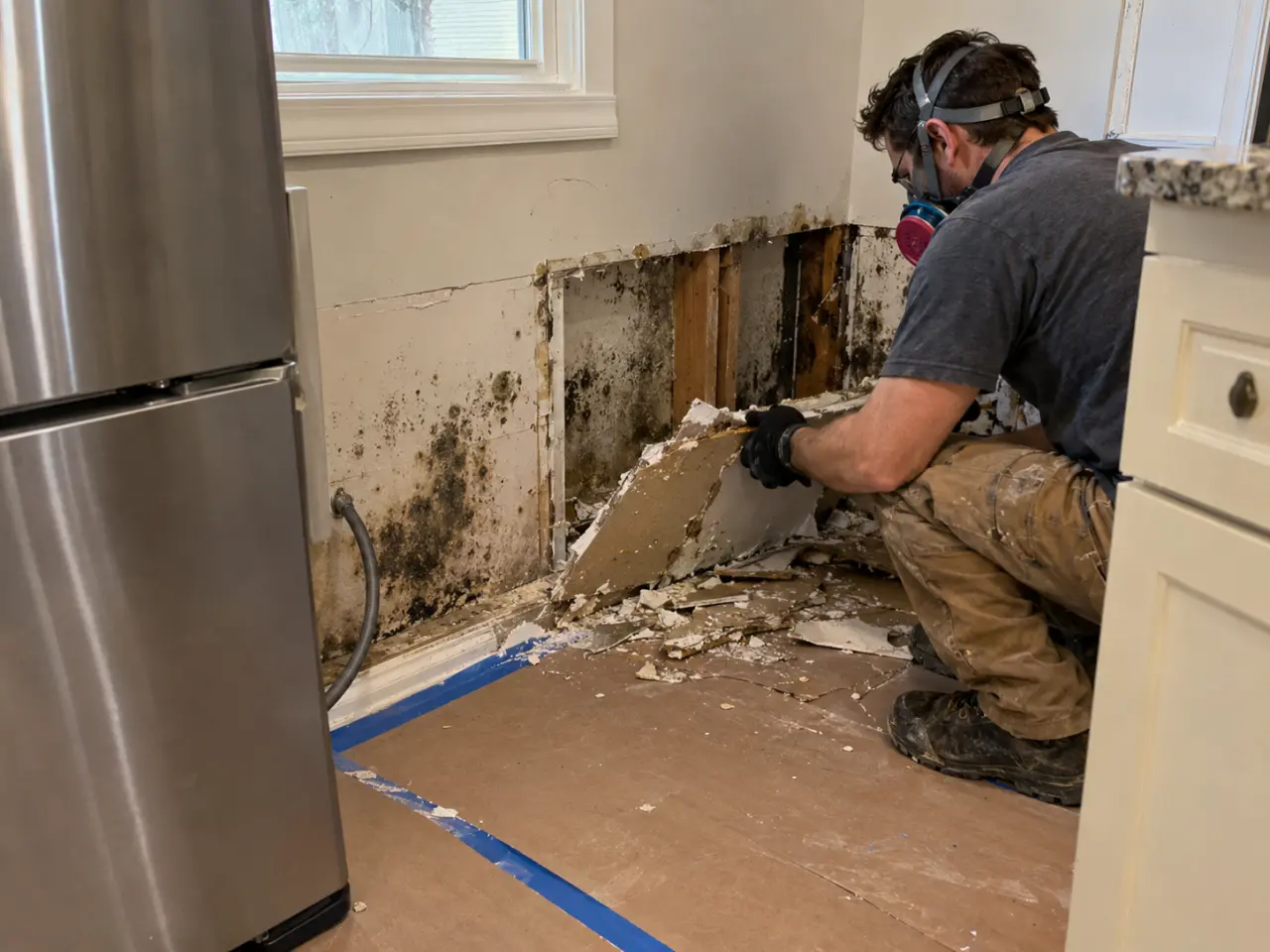
Mold prevention in vacant seasonal homes in Port Orange comes down to one job: keep indoor humidity under 60% and keep water from sitting anywhere it shouldn't. If you do those two things while you're gone, mold almost never gets a foothold - even through a Florida summer. The problem is that most seasonal owners shut the house down the way they would up north, and a closed-up Port Orange house in July is nothing like a closed-up house in Ohio.
Here's what actually happens while you're away, what settings and checks keep the house dry, and the exact shutdown routine we walk owners through before they lock the door.
Why Vacant Port Orange Homes Grow Mold So Fast
Port Orange sits in a subtropical climate where outdoor relative humidity runs 75-90% for most of the year, and that is the whole story. When a house is occupied, showers, cooking, and open doors get balanced out by constant air conditioning and daily air exchange. When it's empty, the AC cycles less, the doors stay shut, and moisture has nowhere to go.
Three things drive it:
- Stack effect and closed windows. A sealed house traps humidity inside. Without air movement, condensation forms on the coolest surfaces - usually the north-facing exterior walls, the inside of window frames, and the back of the drywall in bathrooms.
- Our summer dew points. From June through September, dew points in the 70s mean any surface below about 70°F will sweat. That includes cold-water pipes, toilet tanks, and AC supply ducts in the attic.
- Small leaks that never get noticed. A slow supply-line drip under a sink or a pinhole in a water heater pan line can run for weeks in an empty house. By the time you return, you're looking at a mold colony and soft drywall.
Mold needs 24-48 hours of sustained moisture to colonize a porous surface. In a vacant Port Orange home, that window is wide open.
How Do I Prevent Mold in a Vacant Seasonal Home in Port Orange?
Prevent Mold in Vacant Seasonal Homes in Port Orange is a moisture-control routine that runs on three tracks: humidity management, water shutoff, and scheduled eyes on the property. Skip any one of them and the other two can't carry the load.
Here's the framework we give every seasonal owner:
- Set the thermostat, don't turn it off. Keep the AC running at 78-80°F. It's not about cooling the house - it's about the coil pulling water out of the air every time it cycles.
- Add a standalone dehumidifier as backup. A 50-pint unit on a hose drain to a sink or slop sink keeps humidity in check if the AC fails. Set it to 55%.
- Shut off the water at the main. If nobody is there to see a leak, don't leave the supply live. Drain the water heater and open the lowest faucet to relieve pressure.
- Kill the standing water sources. Toilet bowls, water heater tanks, and the bottom of the dishwasher all hold water that evaporates into the house. Flush and drain what you can.
- Schedule someone to walk the house. Every 2-3 weeks during summer, monthly the rest of the year.
If you want the full technical version of this - including the humidity-control equipment we install for seasonal owners - our mold prevention Port Orange service is built around exactly this problem.
Should I Leave the Air Conditioner On in an Unoccupied Florida Home?
Yes. Leave the air conditioner on in an unoccupied Florida home, set between 78°F and 80°F. Turning it off to save money is the single most common reason we get called to a moldy seasonal property in Port Orange.
The math is simple. Running an AC at 80°F in a 1,800-square-foot Port Orange home costs roughly $90-$140 a month in 2026, depending on the unit's age and how tight the house is. A whole-house mold remediation on that same home runs $2,200-$6,500 once you factor in drywall removal, treatment, and reconstruction. The AC is the cheaper insurance policy by a wide margin.
A few things to get right if you go this route:
- Don't set it below 76°F. Colder than that and you're paying to cool an empty house, and you risk condensation on supply ducts in the attic.
- Change the filter before you leave. A clogged filter freezes the coil, and a frozen coil stops dehumidifying. That's how a house goes moldy with the AC technically "on."
- Install a smart thermostat with alerts. If the system stops running, you want a text message, not a surprise in October.
- Check the condensate drain line. A blocked drain pan overflows into the ceiling or the air handler closet. That's a mold job waiting to happen.
If your AC is older than 12 years or has a history of freezing up, don't trust it to hold a house dry for six months. Get it serviced before you go, or add a dehumidifier as a second line of defense.
What Humidity Level Should an Empty Port Orange Home Maintain?
An empty Port Orange home should stay between 45% and 55% relative humidity, with 60% as the absolute ceiling. Above 60%, mold spores that are already in the house - and they are always in the house - have what they need to start growing.
Buy a $15-$30 digital hygrometer and put it in the central hallway, away from doors and vents. Check it every time someone walks the property. If it reads above 60% two visits in a row, something has changed and you need to find out what.
Here's what different readings mean:
- Under 45%: Wood floors, cabinet doors, and trim can dry out and crack. Not dangerous, but not ideal.
- 45-55%: The target. Mold stays dormant, materials stay stable.
- 55-60%: Watch it. Increase AC runtime or add dehumidifier capacity.
- Over 60%: Act now. This is the mold growth zone, and in a Port Orange summer it can happen in a week.
One more thing: humidity in a closed house isn't uniform. The primary bathroom and the laundry room will run 5-10% higher than the hallway. If you can, leave interior doors open so air can move.
How Often Should a Seasonal Property Be Checked for Leaks?
A seasonal property in Port Orange should be checked every 2-3 weeks from May through October, and once a month from November through April. That's the frequency that catches a slow leak before it becomes a mold colony.
Whoever walks the house - a neighbor, a property manager, a handyman - needs to do more than glance around. Here's the 10-minute walkthrough:
- Read the hygrometer and write down the number.
- Look under every sink for drips, staining, or a bowed cabinet floor.
- Check the water heater pan and the AC air handler closet for standing water.
- Open the refrigerator and freezer - a dead fridge in a closed house is a mold and odor disaster.
- Walk the perimeter of the interior, looking for new stains on ceilings and baseboards.
- Check the toilet tanks and bowls for evaporation and cracking seals.
- Run a faucet for 30 seconds in each bathroom to keep trap seals wet.
- Look at the exterior for new cracks, roof damage, or irrigation leaks against the foundation.
If you can't get someone there reliably, that's a real problem. We handle vacant-home checks across the area, including regular routes through Mold Remediation in Cypress Head, where a lot of owners are seasonal and the homes sit empty for months at a time.
The Shutdown Checklist Before You Leave Port Orange
The shutdown routine you run in the last 48 hours before you leave is what determines whether the house is dry in six months. Do it in this order.
Water and Plumbing
- Shut off the main water valve.
- Open the lowest faucet in the house and the highest one to drain the lines.
- Turn off the water heater at the breaker and drain the tank.
- Pour two cups of RV antifreeze or mineral oil into each floor drain and toilet trap to stop evaporation.
- Shut off the ice maker and drain the line.
Climate Control
- Set the thermostat to 80°F, fan on AUTO.
- Install a fresh AC filter.
- Place a 50-pint dehumidifier on a sink or tub drain, set to 55%.
- Close all blinds and curtains to reduce heat load.
- Leave interior doors open.
Exterior and Envelope
- Clear gutters and downspouts.
- Check that downspouts discharge at least 4 feet from the foundation.
- Look for missing caulk around windows and doors.
- Trim any vegetation back 12 inches from the exterior walls.
- Confirm the attic has working ventilation - a ridge vent or powered fan.
If you're not sure whether your attic is venting properly, that's worth a look before you go. Attic mold is one of the most common problems we find in seasonal homes, and it's usually a ventilation issue, not a leak. Our attic mold remediation Port Orange team sees it constantly in homes that sat closed through a summer.
Common Mistakes That Cause Mold in Closed-Up Homes
The same handful of mistakes show up in almost every moldy vacant home we inspect in Port Orange. Avoid these and you're ahead of 90% of seasonal owners.
- Turning the AC off completely. This is number one by a mile. A house with no dehumidification in a Florida summer will hit 70-80% indoor humidity within two weeks.
- Closing off rooms. Shut bedroom and bathroom doors trap humid air with no return path. Leave them open.
- Leaving the water on. A supply line that fails in an empty house runs until someone notices. That could be weeks.
- Trusting a single dehumidifier with no drain. A unit that fills its bucket and shuts off is doing nothing. Hose it to a drain.
- Ignoring the first musty smell. Musty odor means active microbial growth somewhere. It doesn't fix itself.
- Assuming the property manager checks. Ask for a written log with humidity readings. If they can't produce one, they're not checking.
- Using a space heater or dehumidifier on an extension cord. Fire risk in an unattended house. Plug directly into a wall outlet.
One more: don't seal the house up tight thinking you're keeping humidity out. In Port Orange, you're keeping it in. A house needs to breathe or be actively dehumidified - one or the other.
When to Call a Professional
Call a professional when you smell must, see staining on ceilings or baseboards, or your humidity readings stay above 60% despite the AC running. Those three signals mean moisture has already done damage somewhere you can't see.
We get calls from owners who come back in November to a house that smells like a basement. By then, the mold is usually behind the drywall in a bathroom or along an exterior wall, and it's not something a bottle of spray cleaner will fix. Our team handles residential mold remediation Port Orange for exactly this scenario - we find the moisture source, contain the affected area, remove the compromised material, and dry the structure before we rebuild.
If you're not sure whether you have a problem, start with an inspection. A proper mold inspection Port Orange tells you what's actually growing, where it's coming from, and whether you need remediation or just a dehumidifier and better habits.
For owners across the region, we run the same playbook in Mold Remediation in Waters Edge and the surrounding neighborhoods - seasonal homes, closed up for months, with the same humidity problem every year.
Frequently Asked Questions
How do I prevent mold in a vacant seasonal home in Port Orange?
Keep the AC running at 78-80°F, add a 50-pint dehumidifier set to 55%, shut off the water at the main, and have someone walk the house every 2-3 weeks in summer. Those four steps handle almost every mold risk in a vacant Port Orange home.
Should I leave the air conditioner on in an unoccupied Florida home?
Yes. Leave it on at 78-80°F. Running the AC costs roughly $90-$140 a month in 2026, while whole-house mold remediation runs $2,200-$6,500. The AC is the cheaper option, and it's the only thing actively removing moisture from the air.
What humidity level should an empty Port Orange home maintain?
Between 45% and 55% relative humidity, with 60% as the hard ceiling. Above 60%, mold spores already present in the house can begin colonizing porous surfaces within 24-48 hours. Check readings with a digital hygrometer on every property visit.
How often should a seasonal property be checked for leaks?
Every 2-3 weeks from May through October, and monthly from November through April. Each visit should include a humidity reading, a look under every sink, a check of the water heater pan and AC closet, and a scan for new ceiling or baseboard stains.
Will a dehumidifier alone prevent mold in a closed-up house?
Only if it drains continuously and the house is otherwise sealed against water intrusion. A dehumidifier that fills its bucket and shuts off does nothing. Hose it to a sink or tub drain, set it to 55%, and still run the AC as the primary dehumidifier.
Get Help With Mold Remediation in Port Orange
If you've come back to a musty seasonal home or you want a professional to check it before you leave, Port Orange Mold Force handles inspections, moisture control, and full remediation for vacant properties across the area. We'll tell you exactly what's growing, what it costs to fix, and how to keep it from coming back.
Call us at (386) 270-9167 to schedule an inspection or a pre-departure moisture check.