How Atlantic Coast Humidity Affects Mold Growth in Port Orange Homes
Atlantic Coast humidity keeps Port Orange homes above the mold threshold for months at a time. Here's how it works, where it shows up, and how to stop it.
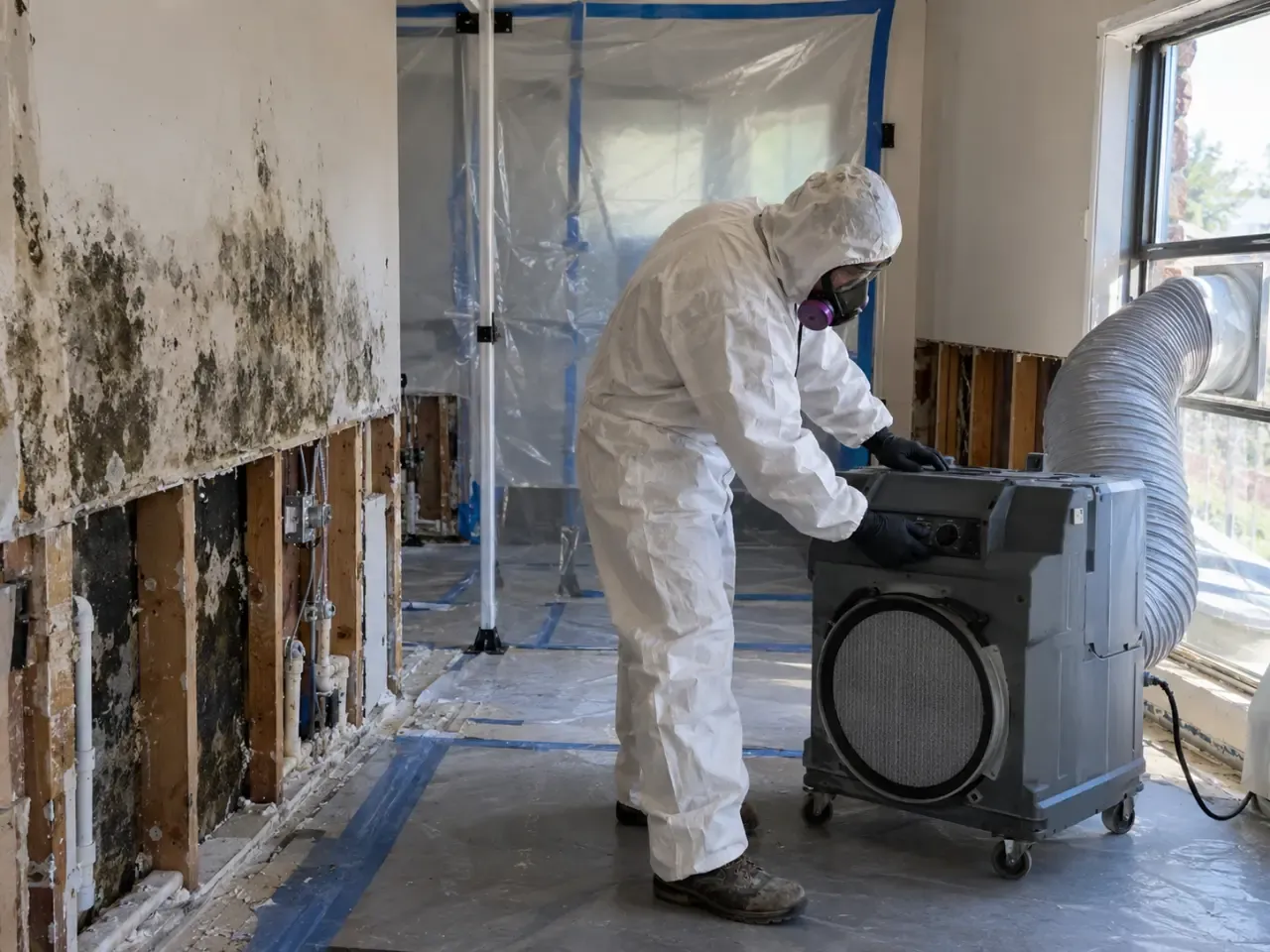
Atlantic Coast humidity makes mold more likely in Port Orange homes because our outdoor air stays above 70% relative humidity for most of the year, and that moisture migrates indoors through open doors, attic vents, and every small gap in the building envelope. Once indoor humidity climbs past 60%, mold spores that are already sitting on your drywall, closet shelves, and AC coils have everything they need to colonize. Below, we break down the specific numbers, the rooms where we find growth most often, and the fixes that actually work in this climate.
Atlantic Coast Humidity and Mold Growth in Port Orange Homes is the relationship between our marine air mass and the moisture conditions inside your house - and it is the single biggest reason mold calls spike here from May through October.
Does Atlantic Coast humidity make mold more likely in Port Orange homes?
Yes - and the mechanism is straightforward. Port Orange sits roughly two miles from the Atlantic, so the prevailing onshore breeze pushes warm, salt-laden, moisture-heavy air across the city almost every afternoon. That air carries a dew point that frequently sits in the low-to-mid 70s from May through September, which means any surface in your home cooler than that dew point will collect condensation.
The practical effect: your AC runs hard, your windows sweat, and your indoor humidity hovers between 55% and 70% even when nothing is leaking. Mold needs three things - organic material (drywall paper, wood framing, dust), a food-safe temperature (anywhere from 40°F to 100°F), and moisture. Two of those three are always present in a Port Orange home. You only control the third.
We have run Mold Remediation Port Orange FL calls in every month of the year, but the volume from June through September is roughly triple what we see in January and February. That is not a coincidence - it is humidity.
The numbers that matter: humidity, temperature, and time
Indoor relative humidity above 60% is the threshold where mold growth accelerates in Port Orange homes, and above 70% it can colonize visible surfaces in as little as 48 to 72 hours.
Here is the range we watch on a hygrometer during an inspection:
- Below 50% RH - mold growth is essentially dormant. This is where you want to live.
- 50-55% RH - acceptable for most of the year, but watch it during the rainy season.
- 55-60% RH - slow growth on dust and drywall paper. Musty smell starts here.
- 60-70% RH - active growth on most organic surfaces within one to two weeks.
- Above 70% RH - visible colonies in 48-72 hours. This is what we see in closed-up garages and vacation homes.
Temperature matters too. Mold grows fastest between 77°F and 86°F - which is exactly the temperature range of an unconditioned Port Orange attic from April through October. That is why Attic Mold Remediation Port Orange FL is one of our most requested services. Attic decking routinely hits 130°F on a July afternoon, but the sheathing on the shaded north side of the roof stays in the mold-friendly 80s while holding moisture from the humid air that vents in at the soffits.
Where coastal humidity mold shows up in Port Orange houses
Coastal humidity mold problems in homes here cluster in five predictable places, and we check every one of them on a standard inspection.
1. Attic sheathing and roof decking
Warm, moist air rises from the living space into the attic. If your soffit vents are blocked by insulation or your ridge vent is undersized, that moisture condenses on the underside of the roof deck overnight. We find black staining on the north-facing sheathing in roughly one out of three attics we inspect in Port Orange.
2. AC air handler closets and drain pans
Your air handler sits in a closet or garage that is often 10-15°F warmer than the rest of the house. The cold coil and drain pan sweat. A pan that drains slowly - or a condensate line clogged with algae, which is common here - keeps the closet floor wet all summer.
3. Bathroom ceilings and exterior walls
Port Orange bathrooms without a working exhaust fan hold 75-85% RH for 30 minutes after every shower. Over a year, that is enough to stain the ceiling paint and start growth along the grout lines and the back of the drywall. If you are seeing dark speckling around the shower, that is Bathroom Mold Removal Port Orange FL territory, not a cleaning problem.
4. Exterior wall cavities behind furniture
Any large piece of furniture pushed flat against an exterior wall traps a pocket of still, humid air. We pull beds and dressers away from walls during inspections and find growth on the back of the drywall on a regular basis in homes built before 2005.
5. Garage ceilings and stored boxes
An unconditioned Port Orange garage runs 80-90% RH on a rainy July week. Cardboard boxes, particleboard shelving, and drywall ceilings soak it up.
Why Port Orange is harder on a house than inland Florida
Port Orange homes face a humidity load that inland cities like DeLand or Ocala do not, because the ocean moderates our temperature and keeps the dew point high around the clock.
Three local factors stack up:
- Onshore breeze. The sea breeze kicks in most afternoons, pushing marine air inland. That air is already near saturation.
- Afternoon thunderstorms. From June through September, Port Orange averages 6 to 8 inches of rain per month. Every storm raises outdoor RH to 90%+ for hours.
- Older housing stock. A large share of Port Orange homes were built between 1975 and 2005, before modern air-sealing and vapor-management details became standard. Those houses leak air - and humid air - through recessed lights, attic hatches, and outlet boxes.
We see the same pattern in the older neighborhoods off Nova Road and Dunlawton. In Mold Remediation in Cypress Head, for example, the combination of mature tree canopy (which shades roofs and slows drying) and 1990s construction means attic moisture problems show up earlier than they do in newer builds.
Signs of moisture-related mold in a Port Orange home
Signs of moisture-related mold in a Port Orange home usually start as smell and condensation long before you see visible growth, so trust your nose and your windows.
Watch for these:
- A musty, earthy smell in one room - usually a bedroom, bathroom, or the hallway near the AC closet.
- Condensation on interior window glass in the morning, even when the AC has been running.
- Paint or wallpaper that bubbles, peels, or feels soft to the touch.
- Dark speckling along ceiling edges, crown molding, or the corners of exterior walls.
- Baseboards that feel spongy or show a dark line where they meet the carpet.
- An unexplained jump in your power bill - a coil fouled with mold and dust loses efficiency fast.
- Allergy-like symptoms that get worse when you are home and better when you travel.
If you check two or more of these boxes, a Mold Inspection Port Orange FL is the right next step. We use moisture meters, thermal imaging, and air sampling to confirm what is growing and where the water is coming from - because killing the mold without fixing the moisture source just means it comes back in six weeks.
How to reduce indoor humidity and prevent mold in Port Orange
You can reduce indoor humidity and prevent mold in Port Orange by keeping the house under 55% RH, running the AC fan on low continuously, and sealing the air paths that pull humid outdoor air into wall cavities and attics.
Here is the routine we recommend to homeowners between professional visits:
- Set the thermostat no higher than 76°F. Every degree you raise it also raises indoor RH. Vacation settings above 80°F are the number-one cause of mold we find in seasonal homes.
- Run the AC fan on low, not auto. Constant air movement keeps surfaces above the dew point and filters more air per day.
- Add a standalone dehumidifier if your indoor RH stays above 55%. A 50-pint unit in a 1,500 sq ft home pulls roughly 2-3 gallons of water per day in July.
- Fix exhaust fans. A bathroom fan should clear the mirror in under 5 minutes. If it does not, the duct is likely crushed or the fan is undersized.
- Keep furniture 2 inches off exterior walls. Air circulation is free mold prevention.
- Change the AC filter every 60 days during the cooling season - 30 days if you have pets.
- Check the condensate drain line monthly. Pour a cup of vinegar down the access port to slow algae growth.
If your home has a chronic humidity problem - a crawlspace that stays damp, a garage that never dries out, or an attic with stained sheathing - a permanent solution beats a portable one. Our Mold Prevention and Moisture Control Port Orange FL service includes whole-home dehumidification, ventilation corrections, and vapor-barrier work sized to your square footage.
What to watch out for: common mistakes we see
Most of the mold problems we remediate in Port Orange were made worse by one of four well-intentioned mistakes.
Bleaching the surface and calling it done. Household bleach kills mold on non-porous tile, but it does not penetrate drywall paper or wood. The colony regrows from the root structure within weeks. On porous materials, the affected section has to come out.
Running a dehumidifier with the windows open. We see this constantly. A dehumidifier pulling 90% outdoor air will never get the house below 60%. Close up the house first.
Turning the AC off while away. A Port Orange home closed up at 85°F and 75% RH for two weeks will grow mold on the furniture, the curtains, and the closet walls. Set it to 78°F and leave it running.
Ignoring a small roof or plumbing leak because it is not dripping anymore. The wood behind that stain is still wet. Mold does not need an active leak - it needs the moisture that is already in the assembly. If you have had any water intrusion in the last 12 months, get it checked.
One more: do not run a box fan over a wet wall to "dry it out." Moving humid air across a wet surface spreads spores through the room. If you have more than 10 square feet of visible growth, stop and call us.
When to call a professional
Call a professional when visible growth covers more than 10 square feet, when the musty smell returns after cleaning, or when you cannot find the moisture source - those are the three situations where DIY efforts usually fail.
We handle the whole sequence: locate the moisture, contain the work area, remove affected materials, treat the framing, dry the structure, and verify with post-remediation testing. If the damage includes drywall or trim that has to come out, our Mold Damage Repairs and Reconstruction Port Orange FL crew rebuilds it so you are not left coordinating a separate contractor.
Port Orange Mold Force works throughout the city and the surrounding neighborhoods, and we quote the job upfront before we start. If you are not sure whether you have a mold problem or just a humidity problem, call us and we will tell you honestly.
Frequently Asked Questions
Does Atlantic Coast humidity make mold more likely in Port Orange homes?
Yes. Outdoor air here stays above 70% relative humidity most of the year, and that moisture pushes indoor levels past the 60% mold threshold. Port Orange homes near the ocean see growth 2-3 times more often than inland Florida homes at the same age.
What indoor humidity level encourages mold growth?
Mold growth accelerates above 60% relative humidity and becomes rapid above 70%. Keep your Port Orange home between 45% and 55% year-round. Below 50%, growth on drywall and wood effectively stops.
How can Port Orange homeowners reduce humidity-related mold?
Keep the thermostat at 76°F or lower, run the AC fan continuously, use a 50-pint dehumidifier if indoor RH exceeds 55%, fix bathroom exhaust fans, and change AC filters every 60 days. These five steps prevent most humidity-related mold in Port Orange homes.
When should I get a mold inspection after noticing dampness?
Within 48 hours. Mold can colonize wet drywall in 48-72 hours, so the sooner we inspect, the smaller the remediation. If the damp area is larger than 10 square feet or smells musty, book the inspection immediately.
How coastal humidity affects attic mold in Port Orange FL?
Humid air enters through soffit vents and condenses on the roof sheathing overnight, especially on the shaded north side. Attics here routinely sit at 80-90% RH during the summer, which is why attic mold is one of our most common Port Orange calls.
Get help with Mold Remediation in Port Orange
If humidity has left its mark on your home - musty rooms, stained ceilings, or a smell that keeps coming back - we can find the source and fix it for good. Port Orange Mold Force handles inspection, testing, removal, drying, and repairs under one roof.
Call (386) 270-9167 to schedule your inspection. We will tell you what is growing, where the moisture is coming from, and what it costs to fix - before any work begins.